


Torn Pec? Get Back to Full Strength with the Right Treatment!A pectoral tendon tear can be a painful and frustrating injury, often occurring during heavy lifting or strenuous physical activity. It can cause significant pain and limit upper body movement. These injuries often occur during strenuous activities like weightlifting or contact sports, leaving individuals struggling with daily tasks and hindering their active lifestyles.
At OrthoPro Clinic, we understand the impact of pectoral tendon tears on your overall well-being. Our team of experienced orthopedic specialists offers comprehensive treatment options, including advanced surgical techniques and personalized rehabilitation programs, to help you regain strength, mobility, and get back to doing what you love.
What are Pectoral Tendon Tears?
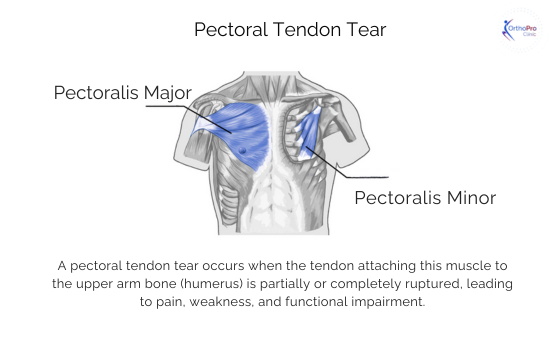
The pectoralis major is a large, fan-shaped muscle in the chest responsible for movements like pushing, lifting, and rotating the arm. A pectoral tendon tear occurs when the tendon attaching this muscle to the upper arm bone (humerus) is partially or completely ruptured, leading to pain, weakness, and functional impairment.
Signs and Symptoms of a Pectoral Tendon Tear
Recognizing the signs of a pectoral tendon tear is crucial for timely treatment. Symptoms include:
- Sudden Pain – A sharp, intense pain in the chest or upper arm, often occurring during weightlifting or strenuous activity.
- Bruising and Swelling – Visible bruising around the upper arm, shoulder, and chest due to internal bleeding.
- Weakness in the Arm – Loss of strength, especially during pushing or lifting motions.
- Deformity in the Chest – A noticeable change in the shape of the pectoral muscle, often appearing asymmetrical.
- Popping Sound at the Time of Injury – Many patients report hearing or feeling a snap at the moment of rupture.
Pectoralis Major Rupture: How severe is It?
A pectoralis major rupture can range from a minor strain to a full-thickness tear. The severity is classified as: 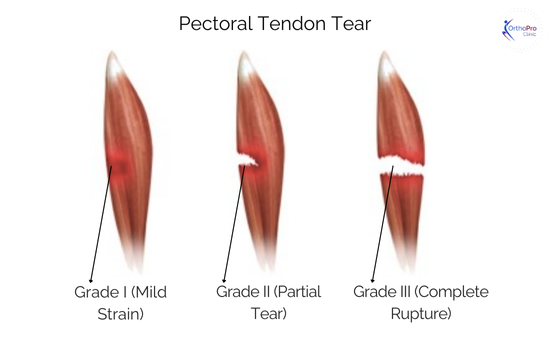
- Grade I (Mild Strain) – Minor stretching or small tears in the muscle fibers without tendon involvement.
- Grade II (Partial Tear) – Partial rupture affecting the tendon but not a complete detachment.
- Grade III (Complete Rupture) – The tendon is fully torn from the humerus, often requiring surgical intervention.
Pec Strain vs Tear: Recognize the Differences
A pectoral strain is a less severe injury involving overstretching or minor tearing of muscle fibers. Strains often cause discomfort but do not lead to a complete loss of strength or function. In contrast, a pectoral tear involves significant structural damage, including tendon detachment, and requires medical intervention for optimal recovery.
Pectoralis Major Tendon Pain: When to Seek Help?
Persistent pectoralis major tendon pain may indicate an underlying strain or tear. If pain lasts more than a few days, worsens with movement, or is accompanied by weakness and bruising, it is essential to consult an orthopedic specialist for a proper diagnosis.
Can a Pec Tear heal without surgery?
Minor pec tears and strains can often heal without surgery if managed appropriately.
Non-surgical treatment options include:
- Rest and Activity Modification – Avoid heavy lifting and activities that strain the pectoral muscle.
- Ice Therapy – Applying ice packs to reduce swelling and alleviate pain.
- Physical Therapy – Strengthening and stretching exercises tailored to restore function.
- Anti-Inflammatory Medications – NSAIDs can help control pain and inflammation.
- Compression and Support – Using a sling or compression bandages to immobilize the area during the initial healing phase.
However, for complete ruptures, especially in active individuals or athletes, surgery is often the best option for restoring full strength and function.
Pectoralis Major Tear Treatment: Surgical Solutions
A pectoral tendon repair surgery is recommended for complete tears. The procedure involves:
- Reattaching the Tendon – The surgeon anchors the torn tendon back to the humerus using sutures or small metal anchors.
- Minimally Invasive Techniques – In some cases, arthroscopic-assisted techniques minimize tissue damage and speed up recovery.
- Post-Surgical Care – Immobilization with a sling for a few weeks, followed by a structured rehabilitation program.
Pectoralis Major Tendon Recovery and Rehabilitation: What to Expect?
Recovering from a pectoral tendon tear requires patience and commitment to rehabilitation.
Recovering from a pectoral tendon tear requires patience and commitment to rehabilitation.
The timeline for recovery typically follows these phases:
Phase 1: Initial Healing (0-6 Weeks)
- Immobilization with a sling to protect the repair.
- Gentle range-of-motion exercises guided by a physical therapist.
- Avoidance of any lifting or strenuous activities.
Phase 2: Strength Restoration (6-12 Weeks)
- Gradual introduction of resistance exercises focusing on light isometrics.
- Stretching and mobility exercises to prevent stiffness.
- Continued pain management and inflammation control.
Phase 3: Full Rehabilitation (3-6 Months)
- Progressive weight training to rebuild muscle strength.
- Functional exercises tailored to daily activities or sports.
- Return to full activity under medical supervision.
Why Choose OrthoPro Clinic for Pectoral Tendon Treatment?
At OrthoPro Clinic, we offer expert pectoral tendon tear treatment, from accurate diagnosis to state-of-the-art surgical solutions and customized rehabilitation programs. Our experienced orthopedic team ensures a smooth recovery with advanced medical techniques and patient-centered care, helping you regain full strength and mobility.
Whether opting for conservative management or surgery, expert guidance is essential for a successful recovery journey. If you suspect a pectoral tendon tear, don’t delay treatment.
Contact OrthoPro Clinic today for a comprehensive evaluation and expert care tailored to your needs.
Preparing for Your Scan: Metal Checklists and Protocols for an...Read More
Diet Vs. Reality: Tracking True Fat Loss Milestones with a...Read More
Fast-tracking your progress: Tips to safely shorten partial knee replacement...Read More
Age Matters: Choosing Partial Vs Total Knee Replacement in Your...Read More
Why a specialized Podiatry Chair is the true backbone of...Read More
What Is the Difference Between Podiatry and Chiropody? Table of...Read More
Robotic Knee Replacement: Faster Recovery for Osteoarthritis Knee Treatment in...Read More
How the Climate in Dubai Impacts Your Osteoarthritis Knee Treatment...Read More
Knee Gel Injections: which is best for your Osteoarthritis knee...Read More
5 signs you might need Shoulder Arthroscopy for your pain...Read More