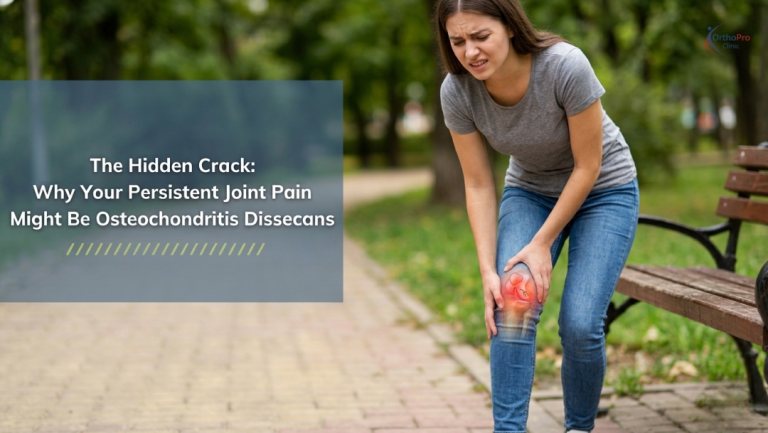
The Hidden Crack: Why Your Persistent Joint Pain Might Be Osteochondritis Dissecans
Seek healthier joints with lasting mobility!
Joint pain that refuses to go away can be frustrating and confusing. Many people assume it is simply due to overuse, aging, or a minor injury that will eventually heal. However, in some cases, persistent joint discomfort may point to a lesser-known condition called osteochondritis dissecans (OCD).
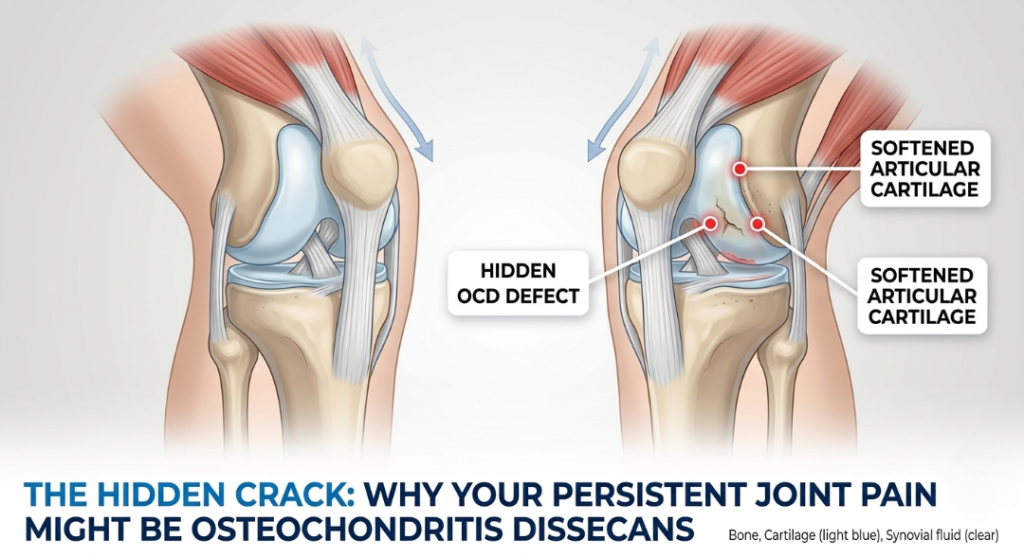
This condition often develops quietly. A small crack or weakened area forms in the bone under the cartilage of a joint. Over time, the bone and cartilage may loosen or separate, causing pain, swelling, and difficulty moving the joint normally.
Understanding the symptoms, causes, and available osteochondritis dissecans treatment options can help patients seek timely care and prevent long-term joint damage. At OrthoPro Clinic, specialists provide both advanced diagnostic techniques and effective treatment solutions to restore joint health and mobility.
What is Osteochondritis Dissecans?
Osteochondritis dissecans is a condition in which a small segment of bone beneath the cartilage loses its blood supply. As a result, the bone becomes weak and may separate along with the overlying cartilage.
The condition most commonly affects the:
- Knee
- Elbow
- Ankle
- Shoulder
Among these, the knee joint accounts for nearly 75% of all cases.
|
If left untreated, the affected cartilage and bone fragment may detach and move inside the joint, leading to pain, stiffness, and even joint locking.
Athletes with Osteochondritis Dissecans: Why are they at higher risk?
Young athletes are particularly vulnerable to osteochondritis dissecans because their joints undergo repeated stress during sports.
Activities that involve repetitive impact or intense joint loading can increase the risk.
These include:
- Football
- Basketball
- Gymnastics
- Baseball pitching
- Running or jumping sports
In athletes with osteochondritis dissecans, the repeated stress placed on the joint may disrupt blood flow to the underlying bone. Over time, this weakens the bone structure and can result into the formation of a loose fragment.
Early diagnosis is essential for athletes, as delayed treatment may affect performance and long-term joint health.
Osteochondritis Dissecans in adults
Although osteochondritis dissecans often begins during adolescence, it can also affect adults.
Osteochondritis dissecans in adults usually occurs when the condition goes undiagnosed earlier in life or when a previous injury causes damage to the bone beneath the cartilage.
Adults may experience:
- Persistent joint pain
- Swelling after activity
- Clicking or locking sensations in the joint
- Reduced range of motion
Compared to younger patients, adult cases are more likely to require surgical intervention because the bone has already matured and has less natural healing capacity.
Osteochondritis Dissecans Radiology: How doctors confirm the condition?
Accurate diagnosis plays a critical role in choosing the right osteochondritis dissecans treatment plan.
Orthopedic specialists typically rely on imaging techniques, commonly referred to as osteochondritis dissecans radiology, to assess the joint.
These may include:
- X-rays: X-rays help identify abnormalities in the bone structure and reveal any loose fragments.
- MRI (Magnetic Resonance Imaging): MRI scans provide detailed images of cartilage, bone, and surrounding tissues. This helps determine the stability of the lesion.
- CT Scans: In some cases, CT imaging is used to examine the size and location of the bone fragment.
These imaging tools allow doctors to evaluate the stage of the condition and recommend appropriate treatment.
Osteochondritis Dissecans vs Osteochondral Defect
The terms osteochondritis dissecans and osteochondral defect are often confused, but they are not exactly the same.
Osteochondritis dissecans
- Caused by loss of blood supply to the bone beneath cartilage
- May lead to a loose bone and cartilage fragment
- Often affects younger individuals
Osteochondral defect
- Refers to direct damage to both cartilage and the underlying bone
- Usually caused by trauma or injury
- Can occur at any age
While both conditions affect the joint surface, their causes and treatment approaches can differ. Proper diagnosis ensures the right osteochondritis dissecans treatment plan is chosen.
Is Osteochondritis Dissecans a disability?
In most cases, osteochondritis dissecans is not considered a permanent disability.
However, untreated or advanced cases can lead to complications such as:
- Chronic joint pain
- Reduced mobility
- Early-onset osteoarthritis
When diagnosed early and treated appropriately, many patients regain full joint function.
|
OCD treatment options at OrthoPro clinic
Non-Surgical Osteochondritis Dissecans Treatment
Early-stage osteochondritis dissecans can often be managed without surgery.
At OrthoPro Clinic, specialists focus on conservative treatment methods that support natural healing and reduce stress on the affected joint.
Activity modification
Patients may be advised to temporarily avoid high-impact sports or activities that place stress on the joint.
Physiotherapy
Targeted physical therapy strengthens surrounding muscles and improves joint stability.
Bracing or Immobilization
In certain cases, braces or protective supports help limit joint movement, allowing the bone to heal.
Anti-inflammatory medication
Medication may be prescribed to reduce pain and swelling.
For younger patients with stable lesions, these treatments often lead to successful recovery.
Surgical Osteochondritis Dissecans Treatment
When conservative treatment does not provide relief, or when the bone fragment becomes unstable, surgery may be recommended.
Orthopedic specialists at OrthoPro Clinic offer advanced surgical solutions tailored to the patient’s condition.
Arthroscopic Drilling
Small holes are created in the bone to stimulate blood flow and encourage healing.
Fragment Fixation
If the bone fragment is still viable, surgeons may secure it back in place using specialized fixation techniques.
Cartilage Restoration Procedures
In cases where cartilage damage is significant, cartilage repair or transplantation techniques may be used.
Osteochondral Grafting
Healthy bone and cartilage tissue are transferred to the damaged area to restore joint structure.
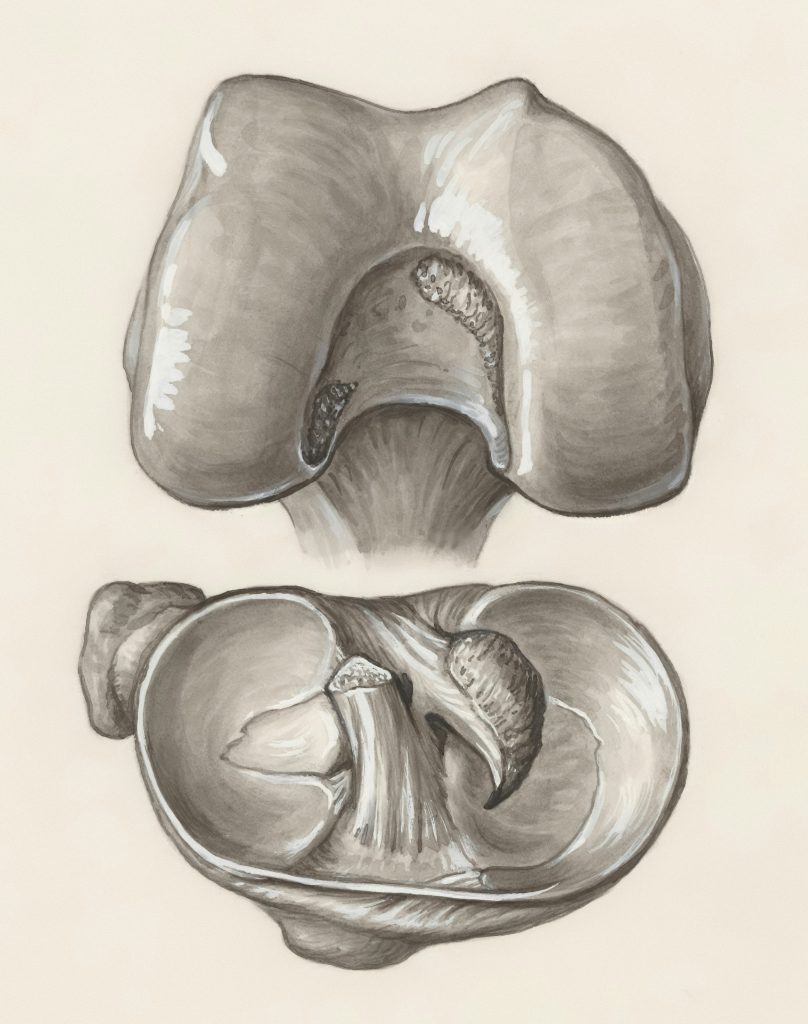

OCD knee surgery success rate
The knee is the most commonly affected joint in osteochondritis dissecans. Fortunately, surgical outcomes are highly encouraging.
|
Most patients experience:
- Significant pain reduction
- Improved joint mobility
- Return to sports or normal daily activities
Recovery timelines vary depending on the severity of the condition and the type of procedure performed.
When should you seek medical advice?
Persistent joint pain should never be ignored.
You should consider consulting an orthopedic specialist if you experience:
- Joint pain lasting longer than several weeks
- Swelling after physical activity
- Clicking, locking, or catching sensations in the joint
- Difficulty fully bending or straightening the joint
Early evaluation can prevent further damage and improve treatment outcomes.
Restore joint health with expert care at OrthoPro Clinic
Living with unexplained joint pain can affect your daily life, mobility, and confidence. The good news is that osteochondritis dissecans is highly treatable when diagnosed early and managed by experienced specialists.
At OrthoPro Clinic, patients receive comprehensive care that includes advanced imaging, personalized treatment planning, and both non-surgical and surgical osteochondritis dissecans treatment options. The clinic’s orthopedic experts use modern techniques designed to protect joint function, relieve pain, and help patients return to the activities they enjoy.
If persistent joint discomfort is affecting your quality of life, do not ignore the warning signs.
Schedule a consultation with the specialists at OrthoPro Clinic.
FAQ's
What is the most common cause of osteochondritis dissecans?
The condition is most often linked to repeated stress or overuse of a joint, especially during sports. These repeated impacts may disrupt blood supply to the bone beneath the cartilage.
Will osteochondritis dissecans go away?
In some young patients, the condition can heal on its own with rest and activity modification. However, more advanced cases may require medical treatment or surgery.
What does osteochondritis dissecans feel like?
It typically causes persistent joint pain, swelling after activity, stiffness, and sometimes a clicking or locking sensation in the joint.
How do you treat osteochondritis dissecans in the knee?
Treatment may include rest, physiotherapy, and protective bracing in early stages. If the bone fragment becomes unstable, minimally invasive surgical procedures may be recommended.
How long does it take osteochondritis to heal?
Recovery time varies depending on severity. Mild cases may improve within a few months, while surgical recovery can take several months for full healing.
How do you treat osteochondritis dissecans?
Management may involve reducing joint stress, physical therapy, and monitoring with imaging. When necessary, surgical procedures are performed to stabilize or repair the affected area.
What is osteochondritis dissecans?
It is a joint condition in which a small portion of bone beneath the cartilage becomes weakened due to reduced blood flow, potentially causing the bone and cartilage to loosen.
How long is recovery from OCD surgery?
Most patients begin gradual rehabilitation within a few weeks, but complete recovery and return to sports may take about 4 to 6 months depending on the procedure.
Our Recent Blogs..
Knee Gel Injections: which is best for your Osteoarthritis knee...Read More

5 signs you might need Shoulder Arthroscopy for your pain...Read More
Visible Symptoms of a Torn Meniscus: Swelling, Bruising, and Knee...Read More
Why Does My Elbow Hurt When I Bend or Straighten...Read More
The Outside Knee Conspiracy: When Your IT Band Mimics a...Read More
Repairing the Soft Spot: How to Stop Chondromalacia Before it...Read More
The Hidden Crack: Why Your Persistent Joint Pain Might Be...Read More
Chronic Pubalgia Diagnosis: The “No-Bulge” Hernia That Conventional Scans Often...Read More
Back Pain Only at Night: Is it your Sleep Position,...Read More
When Your Back Only Hurts at Night: Understanding Nocturnal Back...Read More