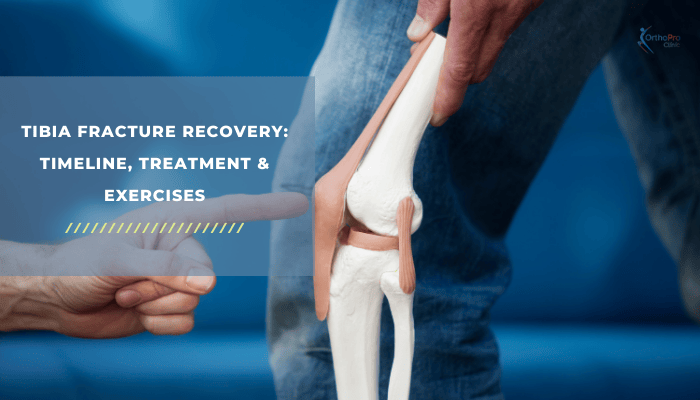
Tibia Fracture Recovery: Timeline, Treatment & Exercises
Tibia fracture recovery: Treatment and healing process
A tibia bone fracture—commonly known as a shinbone fracture—can significantly impact mobility, daily function, and quality of life.
Whether caused by a fall, road accident, or sports injury, recovery from a tibia fracture requires patience, expert care, and a structured rehabilitation plan.
Understanding the tibia fracture recovery process, the treatment options available, and how to optimize healing can help you get back on your feet faster and safer.
Understanding tibia fracture recovery
The tibia, the larger of the two bones in the lower leg, plays a critical role in supporting body weight and enabling movement.
When it breaks, the healing process depends on the type of fracture, its location, and the treatment method used.
Tibia fracture healing time in adults can range from a few weeks for minor cracks to several months for severe or complex breaks. For patients who undergo surgery, tibia fracture recovery time after surgery typically extends to 12–16 weeks, while non-surgical recovery may take slightly longer but follows a similar healing pattern.
At its core, tibia fracture recovery is about restoring strength, stability, and flexibility—through proper medical management, physiotherapy, and dedicated rehabilitation exercises. If you’re dealing with a more complex fracture of tibia, early diagnosis and an individualized treatment plan are key to successful healing.
Types of tibia fractures
Understanding the type of fracture and its location—whether a proximal tibia fracture near the knee or a distal tibia fracture near the ankle—helps determine the tibia fracture treatment plan and estimated recovery time. Common types include:
- Stable fracture – The bone pieces are aligned; minimal immobilization is required.
- Displaced fracture – Bone ends are out of alignment and may need surgical fixation.
- Spiral or oblique fracture – Common in sports injuries or twisting accidents.
- Comminuted fracture – The bone shatters into multiple pieces; recovery is usually longer.
- Open fracture – The bone pierces through the skin, requiring emergency surgery.

Some specific conditions, like Tibial Plateau Fracture (a type of proximal tibia fracture) or Tibial Eminence Fractures, can affect the knee joint surface and may require more intensive treatment and a longer recovery timeline.
Tibia fracture treatment options
The right tibia fracture treatment depends on the injury’s severity:
Non-surgical treatment
For stable fractures, immobilization using a cast or brace may be enough. Patients typically require tibia fracture recovery exercises later to restore mobility.
Surgical treatment
In cases of displaced or open fractures, surgery is often necessary. Orthopaedic surgeons may use metal rods, screws, or plates to hold the bone in position. Post-surgery, tibia fracture recovery after surgery involves both wound healing and bone healing.
Regardless of type, a clear tibia fracture recovery timeline helps track progress and set realistic treatment expectations.
Tibia fracture recovery timeline
Healing from a tibia fracture is gradual and can be broken down into phases:
Weeks 1–4: Initial healing
- The initial focus is on managing pain and reducing severe tibia fracture swelling.
- The patient may use crutches to avoid putting weight on the injured leg.
- X-rays help monitor bone alignment during this phase (tibia fracture recovery X-ray).
Weeks 4–8: Early bone formation
- New bone tissue starts forming.
- Light range-of-motion exercises may begin.
- Tibia fracture after 8 weeks usually shows visible healing progress on X-rays.
Weeks 8–12: Strength and mobility
- Weight-bearing may gradually resume under medical supervision.
- Patients begin structured tibia fracture recovery exercises to restore flexibility and balance.
After 12 Weeks: Advanced rehabilitation
- By tibia fracture after 12 weeks, most patients can walk more comfortably.
- Strength training and gait correction help rebuild normal leg function.
- Athletes may start sport-specific conditioning under physiotherapy guidance.
Full tibia fracture recovery time varies by individual but can extend to 6–9 months for complete healing.

Tibia fracture recovery after surgery
For surgical cases, recovery focuses on both the bone and surrounding soft tissues.
- Phase 1 (0–6 weeks): Limited weight-bearing and wound care.
- Phase 2 (6–12 weeks): Gradual loading and active physiotherapy.
- Phase 3 (12–24 weeks): Functional and strength recovery.
Frequent tibia fracture recovery X-rays ensure proper bone alignment and healing. Following your surgeon’s advice, maintaining nutrition, and attending physiotherapy sessions can accelerate tibia fracture recovery after surgery.
Tibia fracture recovery without surgery
Some fractures, especially stable or hairline ones, heal effectively without surgical intervention. In such cases, immobilization, rest, and gradual physiotherapy play key roles.
Tibia fracture recovery without surgery often involves:
- Cast or brace immobilization for 6–8 weeks.
- Regular imaging to confirm healing.
- Gentle exercises after cast removal to restore muscle strength.
Even though this approach avoids surgery, consistent follow-up is essential to ensure optimal recovery.
Tibia Fracture Recovery Exercises
Rehabilitation exercises are crucial for rebuilding leg strength and preventing stiffness. Your physiotherapist will guide you through progressive tibia fracture recovery exercises, such as:
- Ankle pumps to improve circulation.
- Quadriceps sets to maintain thigh strength.
- Heel slides for knee flexibility.
- Resistance band exercises for balance and coordination.
At OrthoPro Clinic Dubai, our specialized rehabilitation gym offers personalized recovery programs designed for both athletes and non-athletes, ensuring your tibia fracture recovery process is smooth and efficient.
What is the fastest way to heal a broken tibia?
There’s no magic shortcut—but several strategies can enhance the tibia fracture recovery process:
- Maintain a protein-rich, calcium-dense diet to promote bone healing.
- Avoid smoking and alcohol, which slow recovery.
- Stay consistent with physiotherapy.
- Rest adequately and avoid overexertion.
- Follow up regularly for tibia fracture recovery X-rays to track progress.
The fastest way to heal a broken tibia is through disciplined care, patience, and adherence to medical guidance.
Trust OrthoPro clinic Dubai for expert tibia fracture recovery care
At OrthoPro Clinic Dubai, our multidisciplinary team of world-class orthopaedic surgeons and rehabilitation experts provides comprehensive care for every stage of tibia fracture recovery. From diagnosis to post-surgery physiotherapy, our focus is to get you moving again—with confidence and strength.
Our state-of-the-art rehabilitation gym, advanced imaging, and personalized exercise plans ensure an optimal recovery journey—whether you’re an athlete, an active professional, or simply aiming to walk pain-free again.
Take the first step toward full recovery—book an appointment with OrthoPro Clinic Dubai today.
FAQs About Tibia Fracture Recovery
1. How soon can you walk after a tibia fracture?
Typically, patients begin partial weight-bearing after 6–8 weeks. However, full walking ability may return around 12–16 weeks, depending on the fracture type and tibia fracture recovery timeline.
2. How serious is a tibia fracture?
A tibia fracture is a serious injury because it affects one of the main weight-bearing bones in the body. Prompt tibia fracture treatment and rehabilitation are vital for preventing complications.
3. How to heal a tibia fracture faster?
A balanced diet, adherence to prescribed tibia fracture recovery exercises, and consistent medical supervision can significantly speed up recovery.
4. What is the average tibia fracture recovery time after surgery?
On average, tibia fracture recovery time after surgery is about 3–6 months, though it may take longer for full strength restoration.
Our Recent Blogs..
Chronic Pubalgia Diagnosis: The “No-Bulge” Hernia That Conventional Scans Often...Read More
Back Pain Only at Night: Is it your Sleep Position,...Read More
When Your Back Only Hurts at Night: Understanding Nocturnal Back...Read More
Don’t Panic, But Be Vigilant: 8 Common Bad Signs After...Read More
What is Patellar Maltracking? Table of Contents Add a header...Read More
Who is A Candidate For Partial Knee Replacement Table of...Read More
Tibia Fracture Recovery: Timeline, Treatment & Exercises Table of Contents...Read More
OrthoPro Clinic: Prepatellar Bursitis: What to Know About Housemaid’s Knee...Read More
Beyond the Usual Ache: Surprising Orthopedic Reasons for Pain in...Read More
Patellar Tendonitis Treatment: Week-by-Week Recovery Table of Contents Add a...Read More