Repairing the Soft Spot: How to Stop Chondromalacia Before it Becomes Permanent Arthritis

Repairing the Soft Spot: How to Stop Chondromalacia Before it Becomes Permanent Arthritis
Table of Contents
    Add a header to begin generating the table of contents

    If you feel knee pain when climbing stairs, squatting, or sitting for a long time, it might be more than just a strain. This pain could be caused by chondromalacia, also called chondromalacia patella, which occurs when the cartilage under your kneecap softens and wears away. If left untreated, this condition can get worse and may eventually cause joint damage or arthritis.

    At OrthoPro Clinic, our specialists often meet patients who ignore early knee pain, only to find later that their cartilage damage has worsened. The good news is that if chondromalacia is found early and treated properly, it can often be slowed down or even stopped before it becomes a lasting problem.

    Understanding Chondromalacia

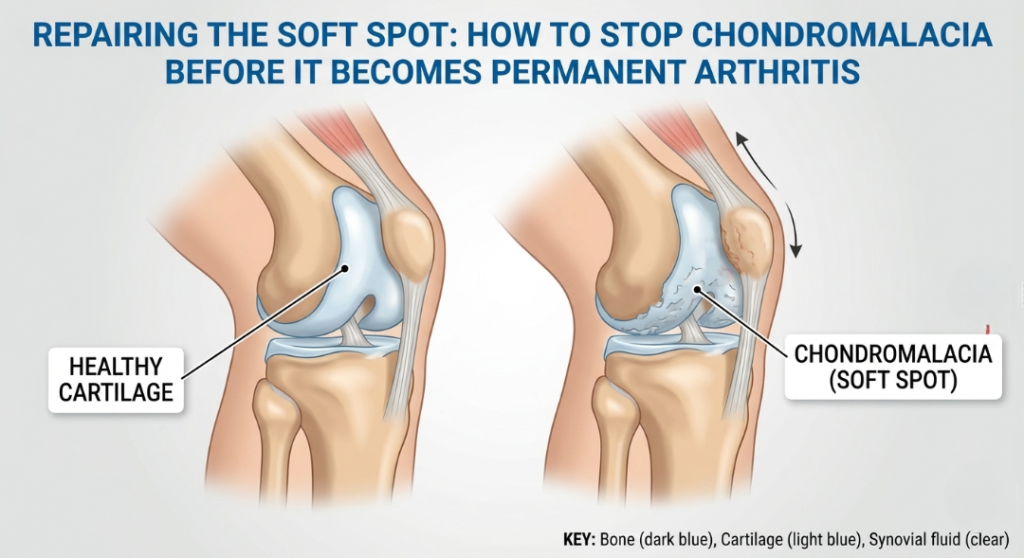
    Chondromalacia means the cartilage under your kneecap (patella) is breaking down or getting softer. This cartilage usually works as a cushion, helping your kneecap move smoothly over your thigh bone.

    When the cartilage is damaged, there is more friction in the joint. This can lead to pain, swelling, a grinding feeling, and trouble doing daily activities like walking down stairs or kneeling. People who play sports, run, or put a lot of stress on their knees are especially at risk.

    What causes Chondromalacia?

    Several factors can contribute to cartilage damage in the knee. Some of the most common grade 4 chondromalacia patella causes and earlier-stage triggers include:

    • Repetitive knee stress from sports or physical activity
    • Weak thigh muscles affecting kneecap alignment
    • Previous knee injuries or trauma
    • Abnormal kneecap tracking
    • Overuse from activities such as running or cycling

    If the kneecap does not move smoothly along the groove of the thigh bone, it puts uneven pressure on the cartilage, which can slowly wear it down.

    Understanding the Severity: Chondromalacia Grades

    At OrthoPro Clinic, the orthopaedic specialist usually sorts the condition into different grades based on how much the cartilage is damaged:

    • Grade 1: Mild softening of the cartilage.
    • Grade 2: Early cartilage damage with small cracks.
    • Grade 3: Deeper cartilage fissures and noticeable deterioration.
    • Grade 4: Severe cartilage loss exposing underlying bone

    The type of treatment you need will depend on how serious your condition is. For example, chondromalacia grade 3 treatment often focuses on strengthening the knee and reducing joint stress, while grade 4 chondromalacia patella treatment may require more advanced interventions.
    2Repairing the Soft Spot How to Stop Chondromalacia Before it Becomes Permanent Arthritis (2)

    Treatment options

    Many people worry about living with chondromalacia patella, especially when pain becomes persistent. However, early treatment can significantly slow cartilage degeneration and prevent long-term complications.

    Non-Surgical Treatments for Chondromalacia

    For patients living with chondromalacia patella, non-surgical interventions are usually preferred. This includes :

    1. Physical Therapy and Strengthening

    Strengthening the quadriceps and hip muscles helps stabilize the kneecap and improve joint alignment. Physiotherapy exercises are often the first step in chondromalacia grade 3 treatment.

    1. Activity Modification

    Limiting high-impact activities like running, jumping, or deep squatting allows the cartilage to recover. Gentler, low-impact activities such as swimming or cycling are often suggested as alternatives. 

    1. Weight Management

    Carrying extra weight puts more pressure on your knee joint. Keeping a healthy weight lowers stress on the cartilage and helps your knees stay healthy over time.

    1. Supportive Treatments

    Doctors might suggest using braces, taping, anti-inflammatory medicine, or injections to help with pain and swelling.

    When is surgery needed?

    In severe cases, particularly grade 4 chondromalacia patella, conservative treatment may not be enough. If the cartilage damage becomes extensive, doctors may consider grade 4 chondromalacia patella surgery.

    Surgical Options

    If non-surgical treatments do not help, surgery may be needed, especially for severe cases like grade 4 chondromalacia patella. Frequently performed procedures include:

    • Chondrectomy (shaving): Damaged cartilage is shaved down to healthy tissue. Its success depends on the severity of cartilage loss.
    • Drilling: Small holes are made in the damaged cartilage to stimulate the growth of healthy tissue from the underlying layers. Localized degeneration may respond better to this method.
    • Full Patellar Arthroplasty: This extreme procedure removes the patella entirely and is only considered when other treatments fail. A major consequence is quadriceps weakness.
    • Cartilage Replacement: Damaged cartilage may be replaced with a polyethylene cap prosthesis. Early results are promising, though wear on the opposing articular surface is expected over time.
    • Autologous Chondrocyte Transplantation: Healthy cartilage cells are transplanted under a tibial periosteal patch to regenerate cartilage.

    Other surgical approaches aim to correct the biomechanical factors that contribute to grade 4 chondromalacia patella causes:

    • Tightening the medial capsule (MC): Aligns the patella properly if the MC is lax.
    • Lateral release: Releases a tight lateral patellar retinaculum to improve patellar tracking.
    • Medial shift of the tibial tubercle: Adjusts the quadriceps pull to reduce wear on the patella.
    • Partial patella removal: In select cases, removing part of the patella may relieve pressure on damaged cartilage.

      3Repairing the Soft Spot How to Stop Chondromalacia Before it Becomes Permanent Arthritis (2)

    Why choose OrthoPro Clinic

    If you ignore ongoing knee pain, the cartilage damage can get worse and raise your risk of arthritis in the future. Getting diagnosed early, doing strengthening exercises, and making lifestyle changes can really help.

    At OrthoPro Clinic, our orthopedic specialists create treatment plans tailored to each patient. These plans help manage symptoms, improve movement, and prevent further cartilage damage.

    Take the first step towards healthier knees

    If you have knee pain or notice any symptoms of chondromalacia, don’t wait for the condition to worsen. Early intervention can help you avoid complex procedures, such as grade 4 chondromalacia patella surgery, and improve your quality of life.

    Book your consultation at OrthoPro Clinic today to get expert guidance on chondromalacia grade 3 treatment, advanced care options, and practical solutions for living with chondromalacia patella. 

    Why Choose OrthoPro Clinic for Patellar Maltracking Treatment

    At OrthoPro Clinic, our approach to patellar maltracking treatment is holistic and patient-centered. We combine cutting-edge diagnostic tools, evidence-based therapies, and personalized rehabilitation programs to help patients regain knee stability and comfort.

    Whether you’re struggling with lateral patellar maltracking after an injury or dealing with chronic knee pain, our team ensures every treatment plan is tailored to your individual needs and lifestyle.

    Our expertise includes:

    • Advanced imaging and biomechanical assessment
    • Expert-led physiotherapy and exercise guidance
    • Minimally invasive surgical correction
    • Compassionate aftercare and rehabilitation support

    Frequently Asked Questions

    Does chondromalacia turn into arthritis?

    Yes. If chondromalacia is not treated, it can eventually cause arthritis. As the cartilage deteriorates, the joint gradually loses its natural cushioning, which can lead to osteoarthritis. Getting treatment early can help lower this risk.

    Can chondromalacia patella be cured permanently?

    In many cases, symptoms can be managed well with physical therapy, lifestyle changes, and medical care. Although the damaged cartilage may not fully regenerate, the right treatment can prevent it from worsening and help people live comfortably with chondromalacia patella.

    How to stop chondromalacia?

    To stop or slow down chondromalacia, you should strengthen the muscles around your knee, avoid activities that put too much stress on the joint, keep a healthy weight, and see a doctor early. Physical therapy is often one of the best ways to help.

    How long does it take for chondromalacia to heal?

    Recovery time varies depending on severity. If your case is mild, you may start to feel better in a few weeks with rest and physiotherapy. More serious cases, such as those needing treatment for grade 4 chondromalacia patella or surgery, can take several months to fully recover.

    Our Recent Blogs..