


Hip pain can be debilitating, affecting everything from your walk to your workouts. Whether caused by a sports injury, a fall, or gradual wear and tear, joint issues in the hip can quickly escalate, reducing quality of life and mobility.
Fortunately, medical science has come a long way. Hip arthroscopy, a minimally invasive surgical procedure, is a preferred solution for treating joint-related hip problems.
In this blog, you can find real-time details about hip arthroscopy, how it works, conditions it can treat, recovery timelines, and costs.
What Is Hip Arthroscopy?
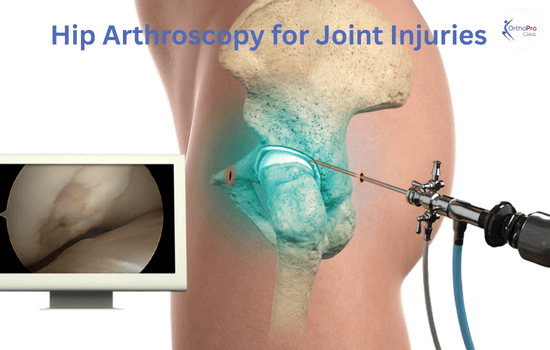
Hip arthroscopy is an orthopaedic surgical procedure where an orthopaedic surgeon inserts a small camera (arthroscope) through tiny incisions to view and treat problems inside the hip joint. Instruments are used alongside the camera to trim, repair, or remove damaged tissue without needing a large open incision.
This technique results in less trauma to surrounding tissues, quicker recovery, and less post-operative pain compared to traditional open surgeries. It’s often used to address joint injuries and conditions such as:
- Labral tears
- Femoroacetabular impingement (FAI)
- Hip dysplasia
- Loose bodies (cartilage or bone fragments)
- Synovitis (inflammation of the hip lining)
- Ligament injuries
When Is Hip Arthroscopy Labral Repair Needed?
The labrum is the ring of cartilage that lines the rim of the hip socket, providing cushioning and stability. A tear in this structure, commonly due to trauma or repetitive motion, can cause significant pain and restricted movement.
Hip arthroscopy labral repair involves trimming or stitching the torn labrum. The surgeon may also reshape any bony overgrowths causing friction and further damage. In many cases, repairing the labrum early can prevent the development of arthritis and delay or even avoid the need for a total hip replacement.
What Makes a Good Candidate for Hip Arthroscopy?
While hip arthroscopy is a promising procedure, it’s not suitable for everyone. Understanding who benefits most from this surgery helps ensure realistic expectations and optimal results.
Ideal candidates typically include:
- Younger individuals (aged 20–50) with isolated injuries like labral tears or femoroacetabular impingement (FAI)
- Active adults or athletes whose symptoms interfere with performance
- Patients with early-stage hip degeneration but no advanced arthritis
- Those who have not responded to conservative treatments like physiotherapy, pain relief, or lifestyle changes
On the other hand, people with advanced osteoarthritis or severe joint damage may not see lasting results with arthroscopy and might benefit more from a total hip replacement.
Additionally, timing matters. Hip arthroscopy has a higher chance of preserving natural joint structure and restoring normal function when performed early, before joint surfaces become extensively damaged. It’s especially effective when combined with targeted physiotherapy and a structured rehabilitation plan post-surgery.
What to discuss with your hip surgeon:
- Whether your symptoms align with common treatable conditions like labral tears or FAI
- MRI or imaging reports to confirm internal joint damage
- Your lifestyle, activity level, and future mobility goals
- The potential need for additional procedures (e.g., cartilage regeneration or bony reshaping)
Hip Arthroscopy vs Total Hip Replacement: What’s the Difference?
Understanding the distinction between hip arthroscopy and total hip replacement is crucial:
Feature | Hip Arthroscopy | Total Hip Replacement |
Invasiveness | Minimally invasive | Major surgery |
Recovery Time | Faster (around 6–12 weeks) | Longer (3–6 months or more) |
Ideal for | Younger patients with early-stage damage | Older adults with advanced arthritis |
Joint Preservation | Preserves the native joint | Replaces the joint entirely |
Hospital Stay | Often outpatient or 1-day stay | Several days |
Hip arthroscopy is often recommended for joint preservation and early intervention, whereas total replacement is a solution for end-stage joint damage.
What to Expect: Hip Arthroscopy Recovery Time
Recovery depends on the individual’s health, the complexity of the surgery, and how well post-operative instructions are followed. Generally:
- First few days: Use of crutches to offload weight from the hip
- 2–6 weeks: Gradual return to normal activities with physiotherapy support
- 6–12 weeks: Most patients report reduced pain and improved function
- 3–6 months: Return to low-impact sports or gym workouts
- Up to a year: Full recovery for high-performance athletes or complex repairs
The hip arthroscopy recovery time can vary, but with proper rehabilitation, most patients regain mobility and experience significant pain relief by the third month.
How Successful Is Hip Arthroscopy?
The hip arthroscopy success rate is considered generally high when the procedure is performed for the right indications. According to orthopaedic experts:
- Over 85% of patients report long-term improvement in pain and function
- The success rate is higher in younger, active individuals
- Labral repairs show better outcomes than simple debridement (trimming)
- Early intervention yields more predictable and sustained results.

Cost of Hip Arthroscopy
The hip arthroscopy cost varies based on:
- Surgeon’s experience and qualifications
- Facility charges (hospital or surgical centre)
- Whether it’s done as a day procedure or requires an overnight stay
- Complexity of the procedure (labral repair, bony reshaping, etc.)
- Insurance coverage
However, considering the benefits of early intervention, such as preventing further joint damage, reducing long-term healthcare expenses, and improving quality of life, hip arthroscopy is often seen as a worthwhile investment for many patients.
Top Reasons to Choose Hip Arthroscopy
Hip arthroscopy is gaining popularity among both patients and surgeons due to the following factors:
- Minimally invasive with small incisions
- Preserves the natural joint
- Faster recovery and return to daily life
- Lower complication risk compared to open surgery
- Effective pain relief and functional improvement
- Can avoid the need for joint replacement
- High success rate for the right candidate
Whether you’re a sportsperson sidelined by hip pain or someone struggling with persistent discomfort and limited movement, hip arthroscopy offers a proactive path to healing.
When Should You See a Specialist?
If conservative treatments like rest, physiotherapy, and anti-inflammatory medications haven’t helped, and your hip pain affects your quality of life, it might be time to explore surgical options. Early diagnosis and timely intervention can prevent any complications and lead to better outcomes.
Your Path to Pain-Free Living Starts Here – At OrthoPro Clinic
At OrthoPro Clinic, we understand how disruptive joint pain can be. Our experienced orthopaedic surgeons are leaders in minimally invasive hip procedures, including advanced hip arthroscopy and labral repair techniques.
With a patient-centered approach, cutting-edge technology, and evidence-based care protocols, we help you recover faster and stronger—whether you’re an athlete, a working professional, or simply seeking a better quality of life.
Book your consultation today and take the first step towards restoring your hip function and reclaiming your active lifestyle.
Fast-tracking your progress: Tips to safely shorten partial knee replacement...Read More

Age Matters: Choosing Partial Vs Total Knee Replacement in Your...Read More

Why a specialized Podiatry Chair is the true backbone of...Read More

What Is the Difference Between Podiatry and Chiropody? Table of...Read More
Robotic Knee Replacement: Faster Recovery for Osteoarthritis Knee Treatment in...Read More
How the Climate in Dubai Impacts Your Osteoarthritis Knee Treatment...Read More
Knee Gel Injections: which is best for your Osteoarthritis knee...Read More
5 signs you might need Shoulder Arthroscopy for your pain...Read More
Visible Symptoms of a Torn Meniscus: Swelling, Bruising, and Knee...Read More

Why Does My Elbow Hurt When I Bend or Straighten...Read More