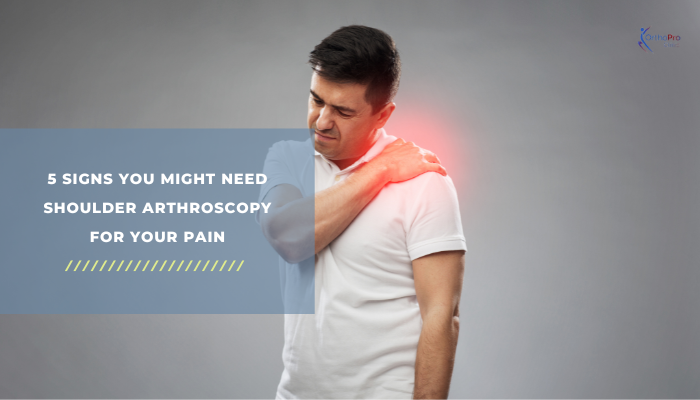
5 signs you might need Shoulder Arthroscopy for your pain

orthopro 15 signs you might need Shoulder Arthroscopy for your pain
Table of Contents
    Add a header to begin generating the table of contents

    Shoulder pain can make the simplest activities like reaching for items on a shelf, getting dressed, or even trying to sleep comfortably tough.

    Many shoulder problems may improve with adequate rest, physiotherapy, or medication. But some issues do not improve or may get worse. In these cases, shoulder arthroscopy can help by providing answers and relief.

    Shoulder arthroscopy is a minimally invasive procedure. Orthopedic specialists use small incisions and a camera to diagnose and treat different shoulder problems.

    Doctors often recommend this procedure when other treatments have not worked or when the shoulder needs precise repair.

    If your shoulder pain isn’t going away or is limiting your quality of life, here are five key signs that you might need Shoulder arthroscopy surgery.

    1. Persistent shoulder pain that doesn’t improve with treatment

    Shoulder discomfort may be a major problem if it persists for weeks or months in spite of rest, medicine, or physical therapy.

    Chronic pain may be caused by:

    • Rotator cuff tears
    • Labral injuries
    • Shoulder impingement
    • Inflammation within the joint

    Shoulder arthroscopy aids in determining the precise reason and treating it concurrently in these situations. It permits precise intervention with little disturbance to adjacent tissues, in contrast to open surgery.

    2. Limited range of motion impacting daily activities

    Are you struggling to lift your arm, rotate your shoulder, or perform tasks like combing your hair or fastening a seatbelt?

    Restricted movement is a major red flag.

    It may indicate:

    • Frozen shoulder (adhesive capsulitis)
    • Internal joint stiffness
    • Soft tissue damage

    When mobility is significantly affected, structured rehabilitation alone may not be enough. In such cases, shoulder arthroscopy can release tight tissues, remove inflamed structures, or repair damaged areas to restore movement.

    After the procedure, guided shoulder arthroscopy exercise programs play a crucial role in regaining flexibility and strength.

    3. Shoulder weakness or instability

    It may indicate structural damage if your shoulder feels weak, unsteady, or like it might “pop out.”

    Common causes include:

    • Recurrent shoulder dislocations
    • Torn ligaments or labrum
    • Muscle imbalances due to injury

    In addition to impairing performance, this kind of instability raises the possibility of recurrent injuries. By mending damaged tissues and reestablishing correct alignment, shoulder arthroscopy surgery helps stabilize the joint.

    A targeted shoulder arthroscopy exercise plan afterward helps strengthen the surrounding muscles, ensuring long-term stability.

    4. Clicking, locking, or grinding sensations in the joint

    Unusual sounds or sensations in your shoulder, such as clicking, grinding, or locking, should not be ignored, especially if they are accompanied by pain.

    These symptoms may indicate:

    • Cartilage damage
    • Loose bodies within the joint
    • Labral tears

    Since these issues often cannot be fully diagnosed through physical examination alone, shoulder arthroscopy allows specialists to visually assess the joint in real time.

    Because it is a diagnostic and therapeutic tool, issues can be resolved right away during the same process, eliminating the need for several interventions.

    5. Pain that worsens at night or disrupts sleep

    Patients with more severe joint problems frequently complain of shoulder ache that gets worse at night. It’s time to treat it seriously if you can’t sleep on the affected side or wake up a lot because of discomfort.

    Night pain is often associated with:

    • Rotator cuff tears
    • Inflammatory conditions
    • Advanced impingement

    With proper care and adherence to shoulder arthroscopy exercise, many patients experience significant improvement in sleep quality during recovery.

    orthopro 115 signs you might need Shoulder Arthroscopy for your pain

    Understanding Shoulder Arthroscopy recovery time

    One of the most common concerns patients have is the shoulder arthroscopy recovery time. The good news is that because the procedure is minimally invasive, recovery is generally faster compared to traditional open surgery.

    Timeline of recovery:

    First few days: Mild swelling and discomfort, managed with medication

    1–2 weeks: Resume light daily activities

    4–6 weeks: Gradual pace of mobility with guided shoulder arthroscopy exercise

    3–6 months: Full functional recovery, depending on the condition treated

    Recovery varies based on the complexity of the procedure and the patient’s overall health. A structured rehabilitation program is essential to achieve the best outcomes.

    What to expect when considering Shoulder Arthroscopy cost

    Another important factor for patients is the shoulder arthroscopy cost. While costs can vary depending on the procedure, facility, and complexity of the condition, it’s helpful to understand what you’re investing in.

    The shoulder arthroscopy cost includes:

    • Pre-operative consultations and imaging
    • Surgical procedure and anesthesia
    • Post-operative care and follow-ups
    • Rehabilitation and physiotherapy sessions

    Selecting a facility that provides all-inclusive care under one roof can ultimately make the procedure more efficient and economical.

    The role of Shoulder Arthroscopy exercise in recovery

    Rehabilitation is just as important as the procedure itself. A well-designed shoulder arthroscopy exercise plan ensures:

    • Faster healing
    • Improved range of motion
    • Reduced risk of stiffness
    • Long-term joint strength

    Exercises usually progress through stages:

    1. Passive movements guided by a therapist
    2. Active-assisted exercises
    3. Strength training and functional movements

    Consistency is key. Patients who follow their shoulder arthroscopy exercise program diligently often see better and faster outcomes.

    🚨The shoulder is one of the most mobile joints in the human body, but that mobility also makes it more prone to instability and injury. Hence, conditions that seem minor at first can gradually worsen without proper treatment.

    Advanced diagnosis and personalized treatment matter

    When dealing with shoulder pain, accurate diagnosis is everything. Advanced imaging, like MRI scans and ultrasound, plays a critical role in identifying the root cause. Once diagnosed, treatment should be tailored, not generalized.

    Whether you need non-surgical therapy or shoulder arthroscopy surgery, the best treatment will depend on your condition, lifestyle, and recovery goals.

    At OrthoPro, we offer advanced Shoulder Arthroscopy and sports recovery for smooth, coordinated care

    At OrthoPro Clinic, patients benefit from a comprehensive, patient-first approach to orthopedic and sports medicine care. 

    With a team of highly experienced specialists, cutting-edge diagnostic tools, and a 10,000 sq. ft. facility dedicated to physiotherapy and performance recovery, every aspect of your journey is carefully managed.

    From accurate diagnosis to advanced shoulder arthroscopy and guided rehabilitation, including shoulder arthroscopy exercise, the focus is always on helping you return stronger, faster, and with confidence.

    If persistent shoulder pain is holding you back, it may be time to explore your options.

    Book your consultation today.

    Our Recent Blogs..