


For many, persistent pain in the hip joint area can be debilitating, turning simple activities like walking, sitting, or even sleeping into a significant challenge.
Because the hip is one of the body’s most significant and crucial joints, any issue here significantly impacts mobility and quality of life.
OrthoPro Clinic is dedicated to the specialised diagnosis and comprehensive treatment of every type of hip pain, providing customised care that targets the underlying source of your discomfort.
Whether you are experiencing a dull ache, a sudden, sharp pain, or severe hip pain at night, our orthopaedist are here to restore your comfort and mobility.
Understanding where your pain in hip is coming from
The term “pain in the hip joint area” can be misleading. While actual joint pain (inside the hip socket) often manifests in the groin or front of the thigh, pain felt on the outer hip, upper thigh, or buttocks is typically related to surrounding structures; muscles, tendons, ligaments, and bursae.
Understanding the location and nature of your pain is the first step toward effective treatment.
Our hip specialists at OrthoPro Clinic perform detailed examinations to differentiate between true intra-articular (joint) pain and extra-articular (outside the joint) pain.
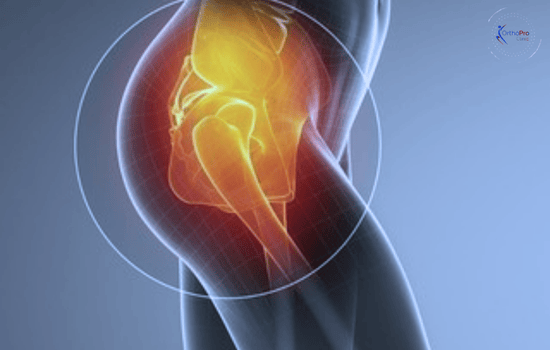
Common reasons for pain in the hip joint area
Hip pain can stem from mechanical issues, disease, inflammation, or injury. Here are the most common culprits:
Arthritis: The deep, Aching pain
Osteoarthritis is the most common reason for chronic pain in the hip joint area. This “wear and tear” condition causes the cartilage that cushions the hip bones to wear away, leading to bone-on-bone friction.
Symptoms of arthritis in the hip joint: The pain is usually a deep, aching sensation in the groin or front of the thigh. It is typically worse in the morning, improves with gentle activity, but worsens again after strenuous use.
The key identifying symptoms include stiffness, a restricted range of motion, and a palpable grinding sensation.
Bursitis and tendinitis: Pain on the outside
Inflammation in the soft tissues around the hip joint is a frequent culprit behind localised pain in the area.
- Trochanteric bursitis: It is characterised by the inflammation of the bursa (a fluid-filled cushion) that rests on the greater trochanter, the noticeable bony point on the outside of the hip. This is a common cause of right-side hip pain female patients report, especially when lying on that side or standing for long periods.
- Hip tendinitis: Inflammation of the thick cords (tendons) that attach muscles to the hip bones. This can manifest as a sudden, sharp pain in left hip comes and goes, particularly after physical activity, such as running or jumping.
Labral tears
The labrum is a cartilage ring that follows the hip socket’s rim, acting like a seal. Tears in the labrum frequently lead to deep, sharp pain and sensations of clicking or locking in the hip. Importantly, they can also be the source of sudden hip pain without injury following just a simple twist.
Non-traumatic conditions and referred pain
Sometimes, sudden hip pain without injury is a symptom of a condition not directly related to mechanical wear and tear, such as:
- Sciatica/Piriformis syndrome: Irritated nerves in the back or buttocks can cause pain down the leg or deep into the hip area.
- Infections (Septic arthritis): While rare, a sudden, intense pain accompanied by fever requires immediate medical attention.
- Avascular necrosis: When the bone tissue loses its blood supply, it can weaken, leading to bone collapse and resulting in severe, abrupt pain.
Specific concerns: Addressing pain in the hip area for women
Hip biomechanics and hormonal changes make specific issues more prevalent in women. If you are experiencing pain in the left hip area or right side hip pain, the cause may relate to the pelvic region:
- Wider pelvis: The wider female pelvis creates a different angle for the thigh bone, which results in elevated stress being exerted on the hip joint, its supporting tendons, and the surrounding muscle groups. This frequently contributes to tendinitis and bursitis.
- Pregnancy and postpartum: Hormonal changes (like relaxin) and the shift in gait during and after pregnancy can strain the hip joint and pelvic floor muscles, leading to acute or chronic hip and leg pain.
- Endometriosis or gynaecological issues: In rare cases, referred pain from the pelvis due to conditions like endometriosis can be mistaken for hip joint pain.
Hip pain at night: When rest becomes agony?
One of the most common complaints we hear is the inability to sleep due to nagging hip pain at night.
This type of pain often indicates inflammation, which worsens when pressure is applied to the bursa or tendons while lying down. Patients with bursitis often find that the pain, which was manageable during the day, flares up the moment they lie on the affected side.
This disruption of sleep can severely hinder the healing process, turning a temporary issue into a cycle of chronic fatigue and discomfort.
Diagnosis and treatment at OrthoPro Clinic
At OrthoPro Clinic, our approach begins with an accurate diagnosis. This includes a comprehensive physical exam, analysis of your symptoms (especially the severity of your sudden, sharp pain in left hip comes and goes), and often, imaging tests such as X-rays, MRI, or ultrasound to visualise the joint structures, cartilage, and soft tissues.
How do we relieve hip pain?
Our hip pain treatment philosophy focuses on the least invasive, most effective path to recovery:
- Conservative management: This is the first line of defence and includes physical therapy, prescribed stretching and strengthening exercises (how to relieve hip and leg pain), anti-inflammatory medications, and rest.
- Targeted injections: Corticosteroid or anaesthetic injections can provide immediate, powerful relief from inflammation. These are particularly effective for bursitis and can often be the fastest way to relieve hip pain.
- Regenerative medicine: Options like Platelet-Rich Plasma (PRP) therapy can help accelerate the healing of damaged tendons and ligaments.
- Surgical intervention: For severe cases, such as large labral tears, hip impingement (FAI), or advanced arthritis, we offer state-of-the-art surgical procedures, including hip arthroscopy and joint replacement, to definitively address the structural cause of the pain in the hip joint area.
Don’t let hip pain limit your life.
Contact OrthoPro Clinic today for a comprehensive evaluation if you are struggling with discomfort.
Why a specialized Podiatry Chair is the true backbone of...Read More
What Is the Difference Between Podiatry and Chiropody? Table of...Read More
Robotic Knee Replacement: Faster Recovery for Osteoarthritis Knee Treatment in...Read More
How the Climate in Dubai Impacts Your Osteoarthritis Knee Treatment...Read More
Knee Gel Injections: which is best for your Osteoarthritis knee...Read More
5 signs you might need Shoulder Arthroscopy for your pain...Read More
Visible Symptoms of a Torn Meniscus: Swelling, Bruising, and Knee...Read More
Why Does My Elbow Hurt When I Bend or Straighten...Read More
The Outside Knee Conspiracy: When Your IT Band Mimics a...Read More
Repairing the Soft Spot: How to Stop Chondromalacia Before it...Read More